How to Record a Video Proposal for Clients: 5 Best Tools (2026)
Quick Answer: How to Record a Video Proposal for Clients
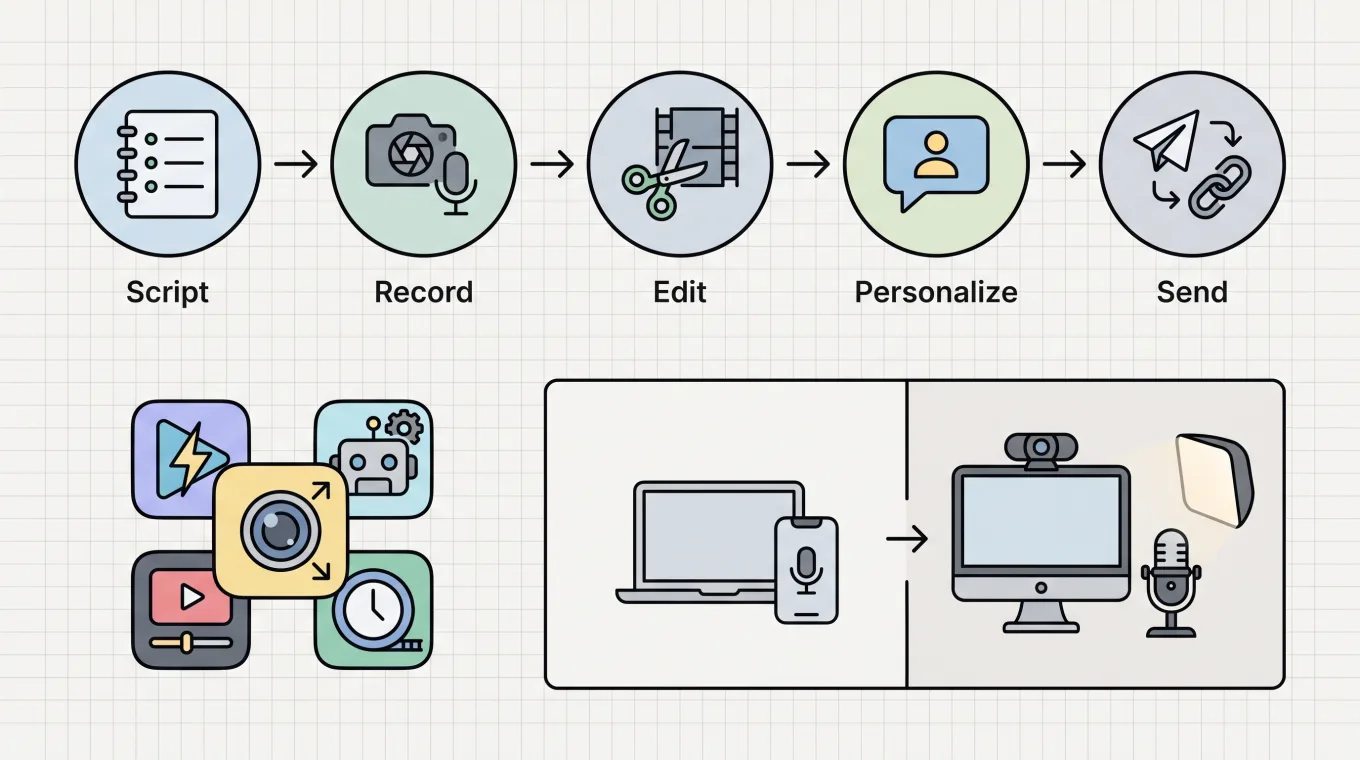
ShareRec is the fastest way to record and share a video proposal for clients, turning one take into a link in under 30 seconds. There's no upload wait between finishing the recording and sending it. Recording a proposal that lands well follows five steps.
- Script — Write 3-5 talking points covering the client's problem, your solution, and the next step. Skip a word-for-word script so the delivery sounds natural.
- Record — Capture your screen and voice in one take with a browser-based recorder, aiming for 2-3 minutes.
- Edit — Trim the opening pause and any dead air; a quick clip is usually enough.
- Personalize — Say the client's name and reference their specific request in the first 15 seconds.
- Send — Share a link instead of a file attachment so the client can watch instantly on any device.
Loom adds AI transcripts and summaries for teams already using its ecosystem. Screen Studio produces cinematic, auto-zoomed recordings on macOS. Veed handles post-production editing and branding after recording. Screencastify allows 30-minute free recordings for longer walkthroughs.
How to Record a Video Proposal for Clients: Equipment, Script, and Delivery
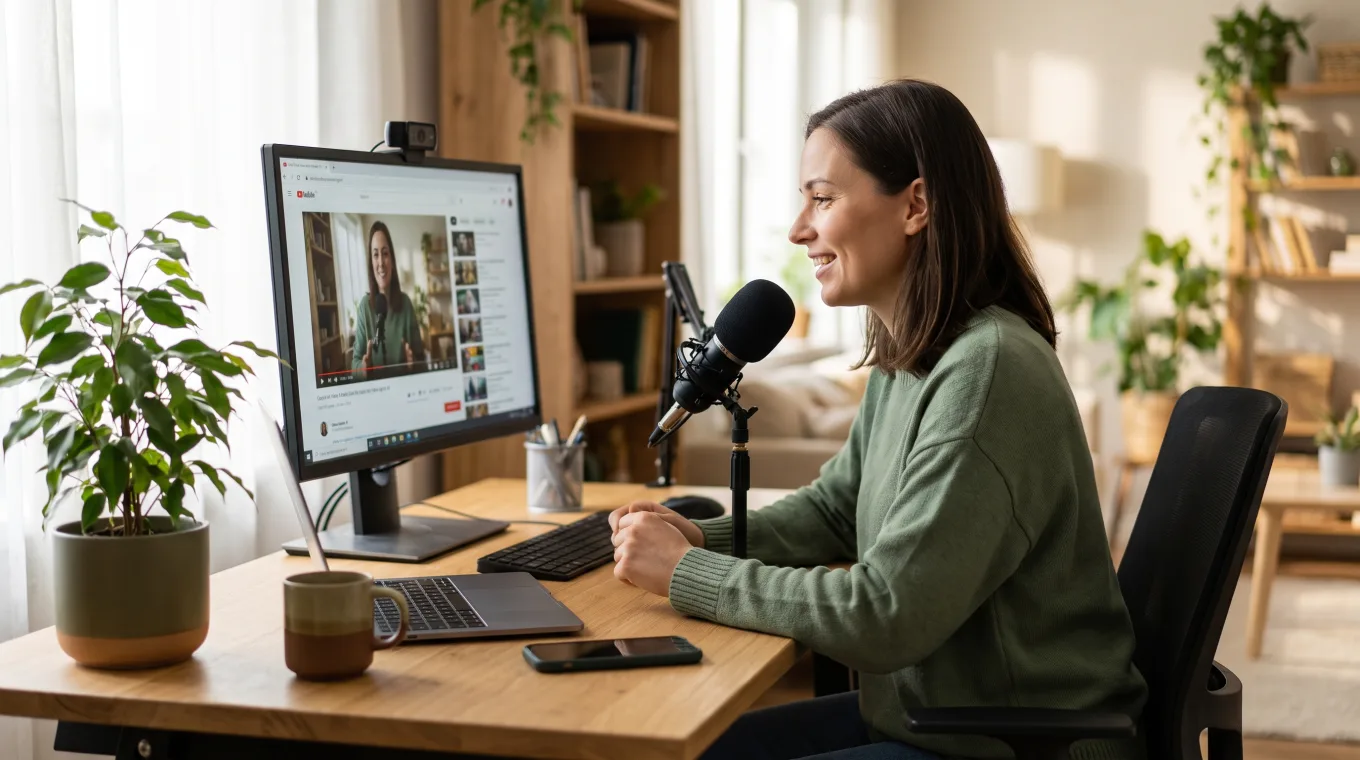
A professional video proposal needs a quiet room, a 3-5 point script, and a link-based delivery method instead of a file attachment. Minimum equipment is a laptop or phone camera with its built-in microphone. A room with curtains or soft furniture cuts down echo. A stronger setup adds a 1080p webcam, a USB condenser microphone, and one soft light placed in front of you rather than behind.
Audio quality affects client trust more than video quality does. Keep the microphone 6-12 inches from your mouth, and turn off HVAC and close windows before recording. Play back a 10-second test clip to catch problems before recording the full take.
Script 3-5 bullet points covering the client's stated problem, your proposed solution, pricing or scope, and the next step you want them to take. Bullet points sound more natural on camera than a word-for-word script.
Delivery has four options, each suited to a different proposal type:
- Shareable link — Fastest option, no download required; some tools expire links after a set period.
- Password-protected link — Adds security for legal, HR, or compliance proposals.
- File transfer (Drive or Dropbox) — Works when the client already uses that ecosystem, but requires a download.
- Unlisted hosting (Vimeo or YouTube) — Suits proposals meant to be revisited; needs manual link management since neither platform auto-expires access.
5 Best Tools to Record a Video Proposal for Clients: Price and Feature Comparison
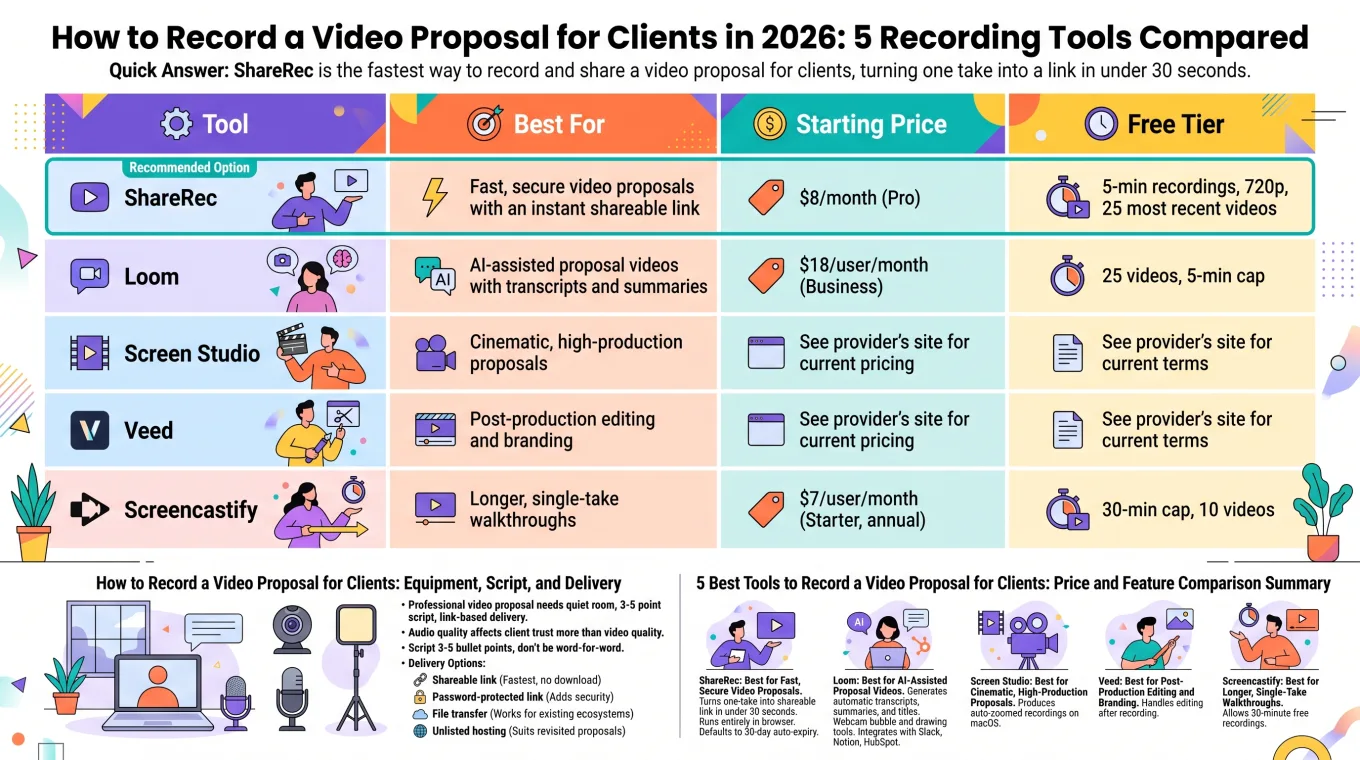
ShareRec starts at $8/month, Screencastify's Starter plan runs $7/user/month billed annually, and Loom's Business plan starts at $18/user/month. The five tools split into distinct recording styles rather than one direct price comparison — instant link sharing, cinematic polish, post-production branding, AI processing, and longer single takes.
| Tool | Best For | Starting Price | Free Tier |
|---|---|---|---|
| ShareRec | Fast, secure video proposals with an instant shareable link | $8/month (Pro) | 5-min recordings, 720p, 25 most recent videos |
| Loom | AI-assisted proposal videos with transcripts and summaries | $18/user/month (Business) | 25 videos, 5-min cap |
| Screen Studio | Cinematic, high-production proposals | $20/month billed monthly, $9/month billed annually | No free plan |
| Veed | Post-production editing and branding | ~$12/month (Basic), $30/month (Pro) | Free plan available — brand kit is Pro-tier |
| Screencastify | Longer, single-take walkthroughs | $7/user/month (Starter, annual) | 30-min cap, 10 videos |
ShareRec: Best for Fast, Secure Video Proposals
ShareRec turns a one-take screen-and-voice recording into a shareable link in under 30 seconds. Pro pricing starts at $8/month for unlimited videos and 1080p recordings up to 30 minutes. Best for: sales reps, support teams, and legal/HR/compliance teams sending time-sensitive, client-facing videos.
The workflow is record, explain, send — no upload progress bar between finishing a take and having a link ready to paste into an email. It runs entirely in the browser, so it works on locked-down corporate laptops that block software installs.
Every video defaults to a 30-day auto-expiry. The owner can switch it to Never, 24 hours, or 7 days in one click, with a dashboard countdown and a warning email three days before deletion. This matters for proposals containing pricing or client-specific terms that shouldn't sit online indefinitely.
The free plan requires an account, like every tier, caps each recording at 5 minutes and 720p, and keeps only the 25 most recent videos. Screen, webcam, and screen-plus-webcam recording are all available on the free tier, including a webcam bubble you can reposition and resize, and trim editing works on every plan. At $8/month, Pro costs roughly half Loom's cheapest paid tier; a $12/month Business plan lifts the recording cap to two hours.
Loom: Best for AI-Assisted Proposal Videos
Loom gives every recording a searchable transcript on every plan, and reserves AI summaries and auto-titles for its top tier. Business plans start at $18/user/month billed monthly, about $15/user/month billed annually. Best for: teams already standardized on a mature recording ecosystem who want AI processing built in.
Every recording gets a searchable transcript on every plan, including the free one. The AI-written summary — useful when a proposal gets forwarded to someone who wasn't on the original call — requires the Business+AI tier. The webcam bubble overlays your face on the screen recording, and built-in drawing tools let you circle or annotate parts of the screen while talking.
Loom integrates with Slack, Notion, and HubSpot, among other tools already in most sales and support stacks. Viewer engagement analytics show whether a client actually watched the proposal or dropped off early.
The free plan supports 25 videos, a 5-minute recording cap, and up to 50 workspace members, and Loom no longer offers a lower-cost "Pro" tier — the cheapest paid plan is Business at $18/user/month. Transcripts and closed captions are included on every tier, including the free plan; AI summaries, auto-titles, and filler-word removal require the Business+AI tier at $24/user/month.
Screen Studio: Best for Cinematic, High-Production Proposals
Screen Studio automatically zooms and pans to follow your cursor, and it runs on macOS only — no Windows or browser-based version exists. The result is a polished, motion-graphics-style recording without manual editing. Best for: teams sending high-production proposals where visual polish matters as much as the message.
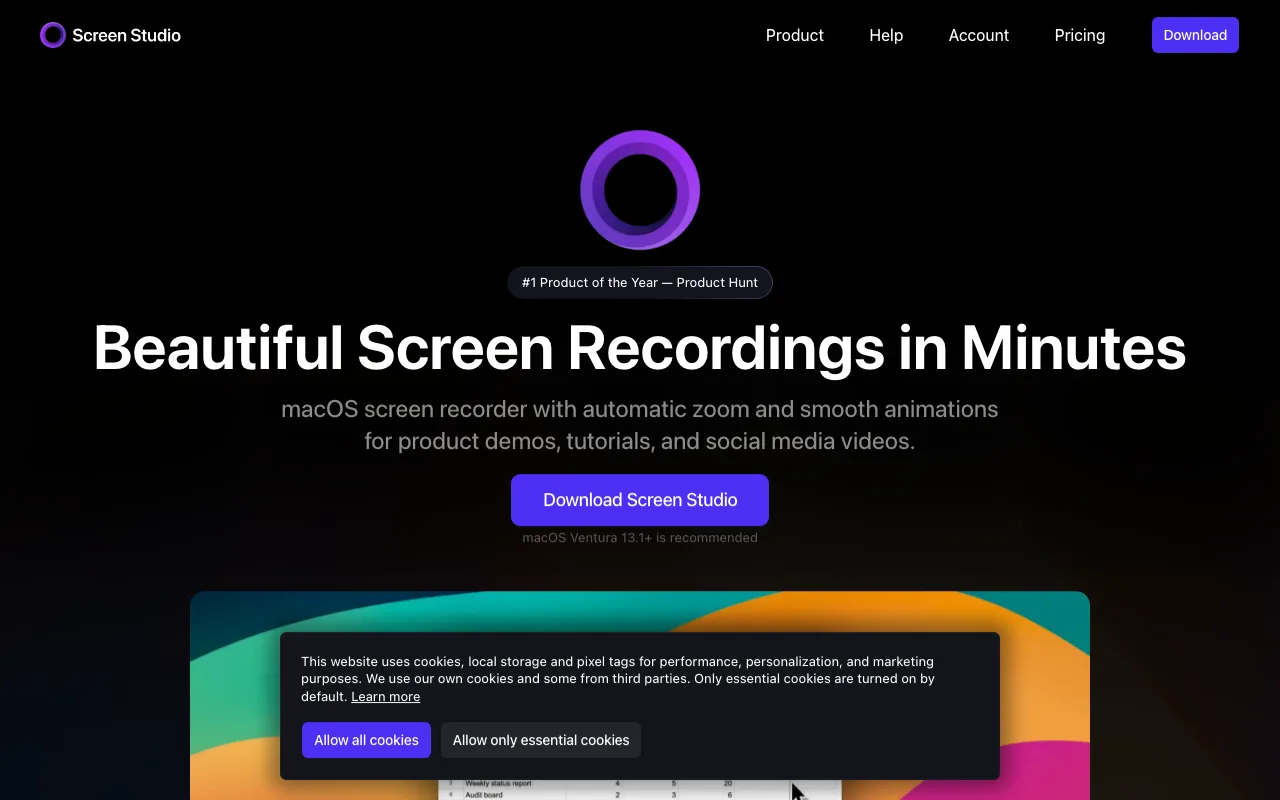
The desktop app tracks mouse movement in real time and applies smooth zoom transitions, so a screen recording looks closer to a produced demo video than a raw screen capture. Custom backgrounds and smooth cursor motion give the export a cinematic feel that stands out in a crowded inbox.
The macOS-only limitation rules Screen Studio out for mixed-OS sales teams. Screen Studio is a $20/month subscription billed monthly, dropping to $9/month billed annually; both plans include shareable links, and there is no permanently free tier.
Veed: Best for Post-Production Editing and Branding
Veed is a browser-based video editor with screen and webcam recording built in, and its auto-captions and brand kit templates apply after the raw footage is captured. A brand kit locks in one logo, font, and color scheme across every proposal a team sends — but it sits on the Pro tier, not the free plan. Best for: teams that want a fully branded proposal video with logos, fonts, and colors matching their company style.
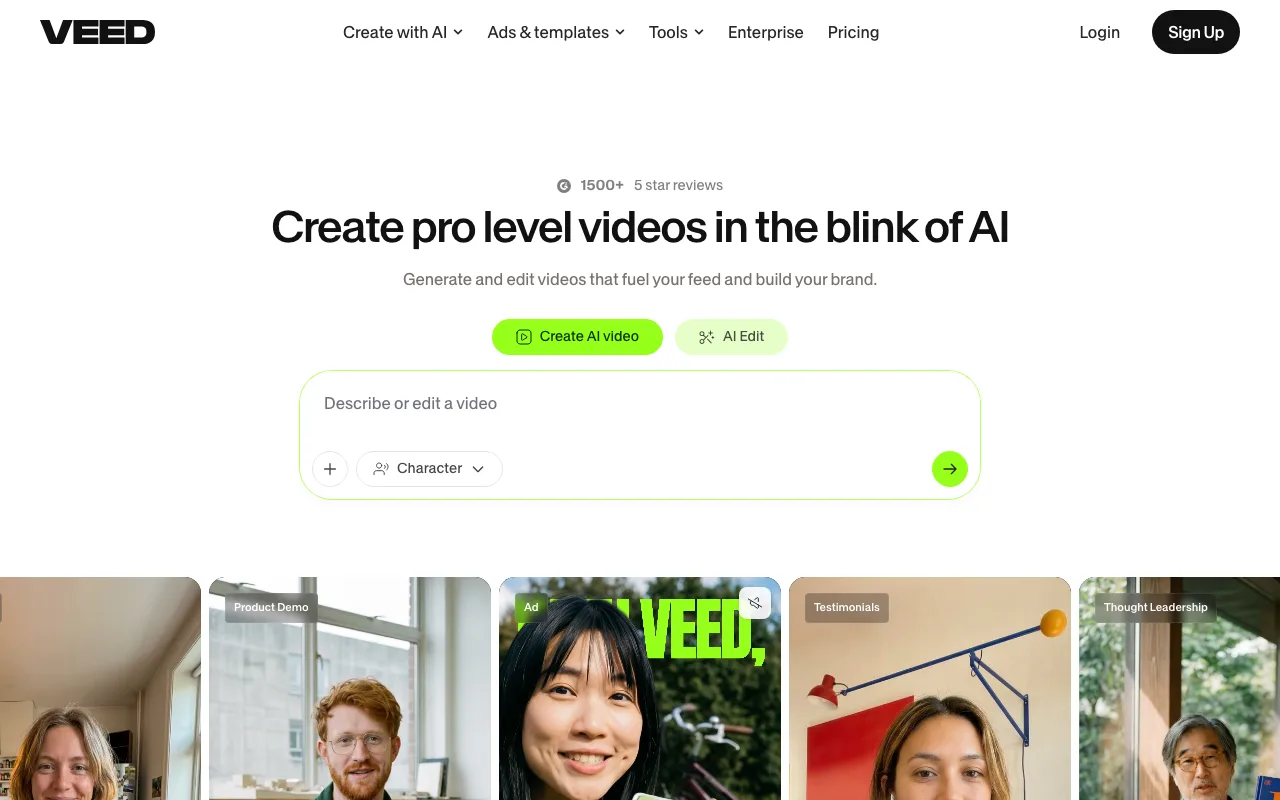
Auto-captions transcribe the recording automatically. Export presets are built for multiple platforms, so the same recording can be resized for email, LinkedIn, or a landing page.
Veed is built primarily as an editor rather than a fast one-take recorder, which adds editing steps before a video is ready to send. Paid plans run about $12/month for Basic and $30/month for Pro, and the free plan leaves the brand kit and 4K export behind the Pro tier.
Screencastify: Best for Longer, Single-Take Walkthroughs
Screencastify's free tier allows 30-minute recordings — longer than most competitors' free caps. Paid Starter plans begin at $7/user/month billed annually. Best for: budget-conscious teams recording detailed scope-of-work walkthroughs that run past the 5-minute limit most free recorders impose.
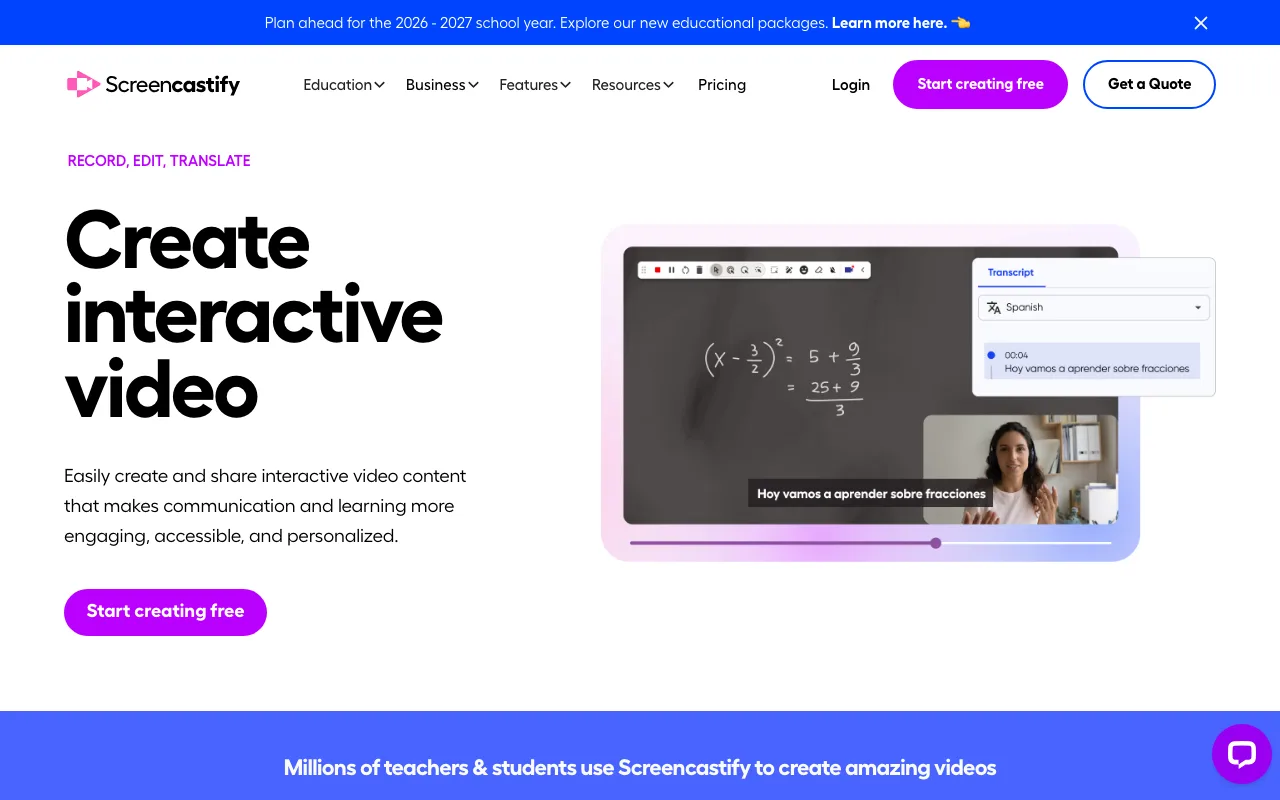
Screencastify runs as a Chrome or Microsoft Edge extension alongside its browser-based editor, so a proposal walkthrough doesn't have to be split into multiple short clips to fit under a time cap. Basic trim and editing tools handle cleanup after recording, and Pro pricing runs $10/user/month billed annually ($25/user/month billed monthly) for additional features.
The free tier keeps only 10 saved videos. Screencastify also has less brand recognition and a smaller integration ecosystem than Loom, which matters for teams that rely on Slack or CRM auto-posting.
Key Takeaways
- ShareRec turns a screen-and-voice recording into a link in under 30 seconds; links default to 30-day expiry, changeable anytime.
- Loom includes transcripts on every tier; AI summaries require Business+AI at $24/user/month. Business plans start at $18/user/month.
- Screen Studio auto-zooms and pans for cinematic polish but runs on macOS only.
- Veed adds captions and brand kits after recording, not fast one-take sharing; the brand kit requires the Pro tier.
- Screencastify offers the longest free cap at 30 minutes; Starter runs $7/user/month annually.
- Most free tiers cap recordings at 5 minutes — Screencastify's 30-minute cap is the exception.
- Shareable links beat file attachments for time-sensitive proposals with expiring access.
Frequently Asked Questions
How do I record my own proposal video?
Record with a screen recorder and voiceover (ShareRec, Loom), an on-camera phone or DSLR setup, or advanced software like OBS. A one-click screen-and-voice recorder is fastest for beginners since it captures screen and narration in a single take without extra editing software.
What's the best free tool to record a proposal video?
Free tiers vary: ShareRec allows 5-minute, 720p recordings and keeps the 25 most recent videos; Loom caps recordings at 5 minutes with a 25-video limit; Screencastify allows 30-minute recordings but keeps only 10 videos. The right choice depends on recording length versus saved-video count.
How long should a proposal video be?
Most client proposals work best at 2-3 minutes — long enough to explain the offer, short enough to hold attention. Longer walkthroughs covering a detailed scope of work or technical demo can run up to whatever recording cap the chosen tool's free tier allows.
What equipment do I need to record a professional proposal video?
At minimum, a phone or laptop camera and built-in microphone in a quiet room are enough. For a more polished result, add a 1080p webcam, a noise-canceling USB microphone, and one soft light placed in front of you rather than behind.
Can I record a proposal video on my phone?
Yes — a phone camera works well for on-camera proposal videos recorded through the camera app. Screen-recording tools that capture a laptop or browser screen, like ShareRec or Loom, require a desktop or laptop browser rather than a phone.
How do I deliver a proposal video to a client?
Four common methods: a shareable link from a recording tool, a password-protected link for sensitive content, a file transfer through Drive or Dropbox, or unlisted hosting on Vimeo or YouTube. Check any auto-expiry policy — ShareRec's links default to 30 days — before sending a video proposal for clients with a tight deadline.
Try it free
Record your first walkthrough free in 30 seconds
No install, no watermark — share a link instantly.
Start Recording Free