How to Record a One-Minute Video Update: 5 Best Tools (2026)
ShareRec is the fastest way to record a one-minute video update, generating a shareable link in under 30 seconds with no upload wait, straight from a browser tab. Loom follows for teams that want AI-generated summaries, titles, and chapters, which sit on its $24/user/month Business + AI tier — transcripts themselves are free on every Loom plan. Screencastify works as a free Chrome or Edge extension recorder with a 30-minute cap on its free tier, useful for anyone who'd rather skip installing desktop software. Screen Studio adds automatic cursor zoom and motion polish for presentation-ready demos, though it runs on macOS only and has no free plan — $20/month, or $9/month billed yearly. Veed pairs recording with a full in-browser editor for captions and text overlays when an update needs light post-production before it goes out.
ShareRec's free tier caps recordings at 5 minutes — more than enough runway for a 60-second update — and requires an account, the same as every tool in this comparison. Pick ShareRec for speed, Loom for AI-assisted team workflows, Screencastify for free Chrome or Edge recording, Screen Studio for visual polish, or Veed for recording plus editing in one app.
Comparing the 5 Best Tools to Record a One-Minute Video Update
ShareRec, Loom, Screencastify, Screen Studio, and Veed each solve a different part of recording and sharing a one-minute video update, spanning a $0 free-tier recorder up to $24/user/month AI-powered team tools. The table below lines up pricing, free-tier limits, and platform support for each.
| Tool | Best For | Free Tier | Starting Paid Price | Platform |
|---|---|---|---|---|
| ShareRec | Instant, no-upload updates | 5-min cap, 720p, 25 videos kept, account required | $8/mo ($6/mo billed annually) | Browser (Windows, Mac, Chromebook) |
| Loom | Team collaboration with AI | 25 videos, 5-min cap, account required | $18/user/mo | Desktop app + browser |
| Screencastify | Free in-browser recording | 10 videos, 30-min cap, account required | $7/user/mo billed annually | Chrome or Edge extension (Windows, Mac, Chromebook) |
| Screen Studio | Polished, presentation-ready recordings | None — paid only | $20/mo ($9/mo billed yearly) | Mac only |
| Veed | Recording plus built-in editing | Free plan available; limits not publicly listed | Not publicly listed — confirm on site | Browser-based |
ShareRec: Best for Instant, No-Upload One-Minute Updates
ShareRec generates a shareable link in under 30 seconds, with no upload wait, because recording and sharing happen in the same browser-based step. Best for: teams that need a one-minute update out the door immediately, including from locked-down corporate laptops.
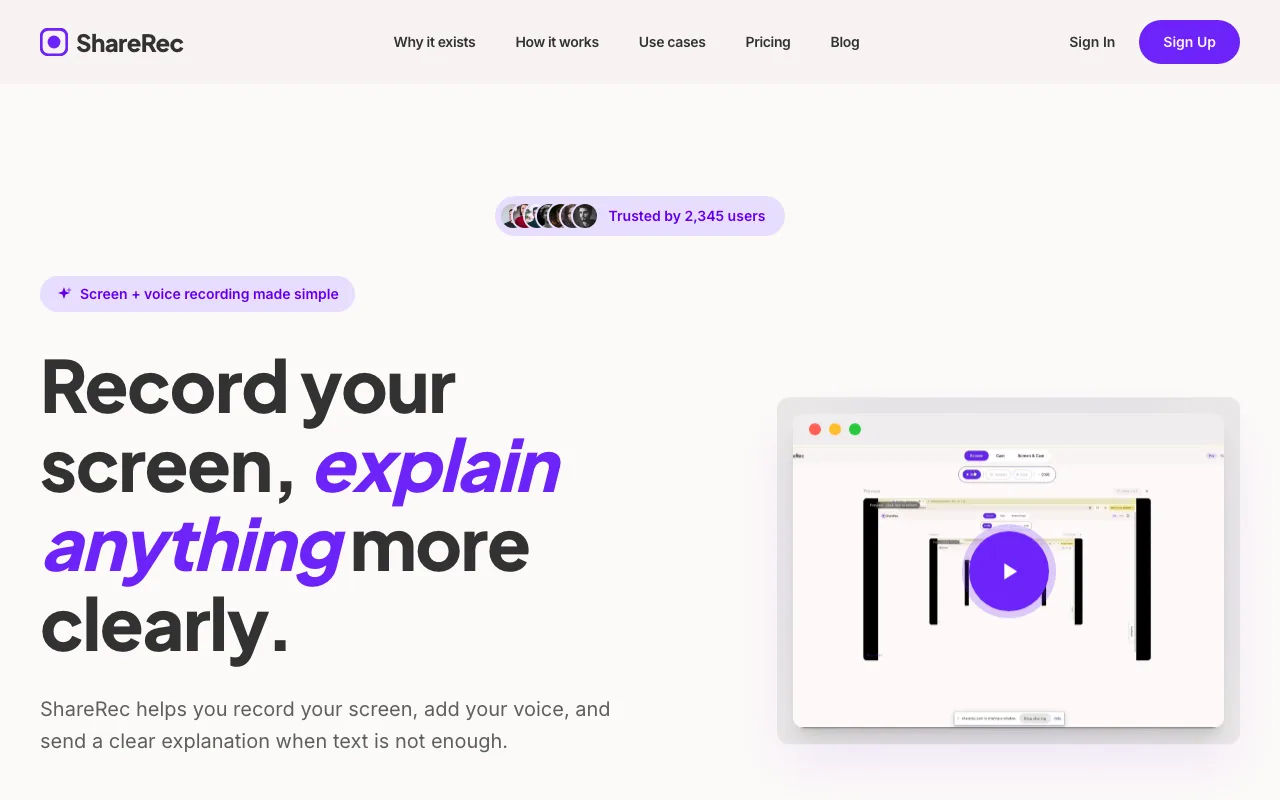
The workflow is record, explain, send — no install, no admin rights required. Every tier, including Free, includes all three recording modes (screen, webcam, screen+webcam), a webcam bubble, and trim & clip editing; none of those are gated behind a paid plan.
The Free plan costs $0/month, requires an account, and caps recordings at 5 minutes — enough for a 60-second update with room to spare. It records at 720p and keeps the 25 most recently recorded videos. Pro costs $8/month ($6/month billed annually) and raises the cap to 30 minutes at 1080p with unlimited stored videos — roughly half the price of Loom's $18/user/month Business tier. Business costs $12/month ($10/month billed annually) and extends the recording cap to 2 hours.
Every new ShareRec video auto-expires 30 days after recording by default. The owner can reset any video to Never, 24 hours, 7 days, or 30 days in one click, with a dashboard countdown and a warning email sent 3 days before deletion.
ShareRec requires an account on every tier, including Free. Free-tier retention is count-based — the 25 most recent videos, not unlimited storage — and there's no AI transcript, summary, or auto-chapter feature on any tier; editing is trim & clip only, with no annotation or drawing tool.
Loom: Best for Team Collaboration with AI Features
Loom pairs desktop and browser screen recording with transcripts free on every plan, and adds AI summaries, titles, and chapters on its Business + AI tier at $24/user/month. Best for: teams sharing updates async where searchable transcripts and auto-summaries save review time.
Recording covers screen, webcam, or both, from a native desktop app or the browser. Transcripts and captions are included on every Loom plan, free tier included. The AI layer sits above that: auto-generated summaries, titles, chapters, and filler-word removal are not part of the $18 Business plan — they require Business + AI at $24/user/month.
The Free plan allows up to 25 stored videos with a 5-minute recording cap, in workspaces of up to 50 members. Paid pricing has consolidated around a single Business tier — no standalone "Pro" plan remains — at $18/user/month billed monthly, or roughly $15/user/month billed annually. A Business + AI tier at $24/user/month is where the AI features begin; the $18 Business plan adds viewer and engagement insights but no AI.
Loom's free plan is capped at 25 total stored videos rather than unlimited, and per-seat pricing scales quickly once a team grows past a handful of members.
Screencastify: Best for Free, In-Browser Recording
Screencastify records screen and webcam directly from a Chrome or Edge extension, with a free tier that allows 10 videos at up to 30 minutes each. Best for: individuals and educators who want to record without installing desktop software.
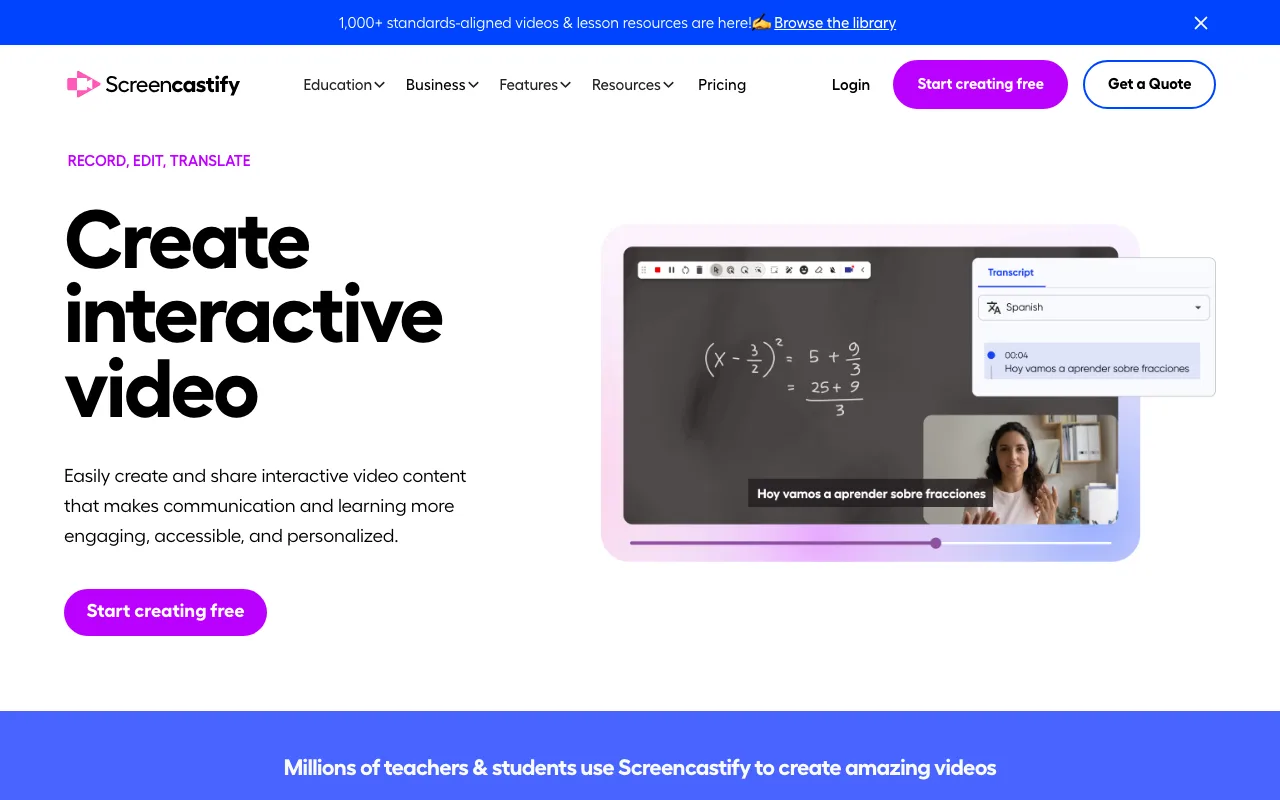
That 30-minute free-tier cap leaves far more runway than a one-minute update needs. Because Screencastify runs as a browser extension rather than a native application, it works the same way on Windows, Mac, and Chromebooks. It ships as a Chrome extension and an Edge extension, with no desktop app, which makes it a direct fit for anyone recording on a work PC without admin rights to install software.
Paid tiers step up from there: Starter costs $7/user/month billed annually ($19/month billed monthly), and Pro costs $10/user/month billed annually ($25/month billed monthly).
Screencastify is tied to Chromium browsers — Chrome and Edge. Anyone whose primary browser is Safari or Firefox needs a different workflow to record.
Screen Studio: Best for Polished, Presentation-Ready Recordings
Screen Studio automatically applies smooth cursor movement and zoom-on-click effects to raw screen recordings, but it's Mac-only, with no Windows or Linux client. Best for: product demos and update videos where visual polish matters as much as speed.
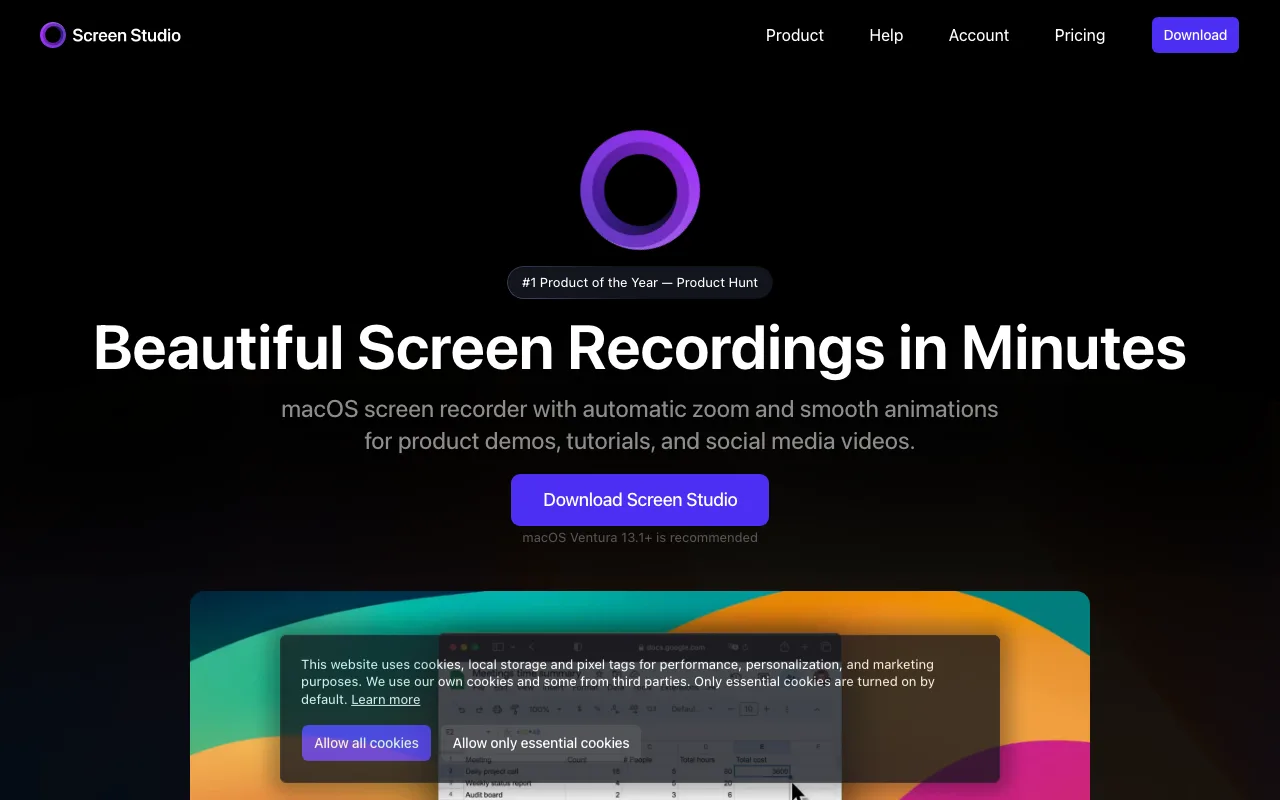
The automatic motion effects are the core value: instead of manually zooming and panning in an editor afterward, Screen Studio applies smooth cursor tracking and click-triggered zoom during processing. That makes it a common choice for product walkthroughs and update videos meant for an external audience.
That Mac-only requirement is a direct gap for anyone recording a one-minute update on a Windows PC. There is also no free plan: Screen Studio costs $20/month, or $9/month billed yearly, and macOS Ventura 13.1 or later is recommended.
Veed: Best for Recording Plus Built-In Editing
Veed combines browser-based screen and webcam recording with a full video editor — trimming, captions, and text overlays — in one workflow, though its per-seat pricing isn't publicly listed and should be confirmed on Veed's site, where a free plan does exist. Best for: a one-minute update that needs light polish, like auto-captions or a background swap, before it goes out.
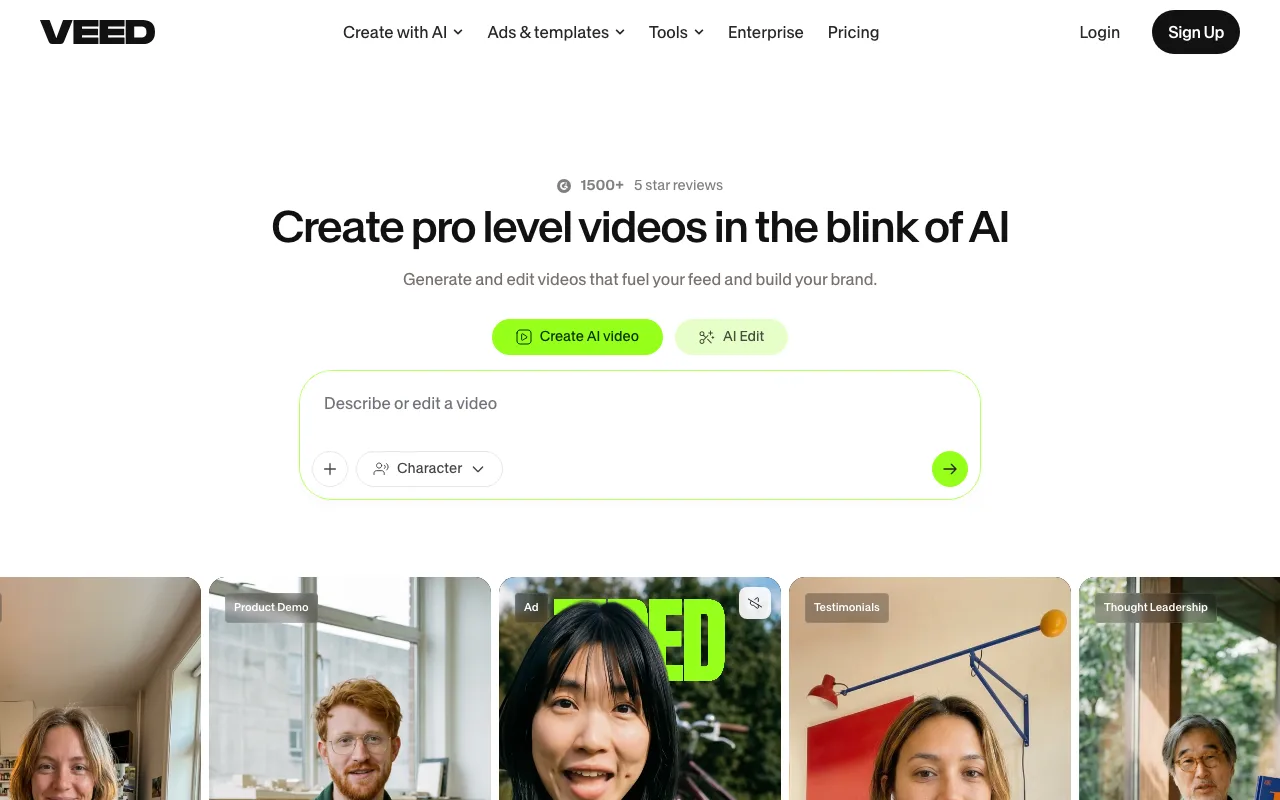
Recording is just one entry point into Veed; the editing suite is the core product, and footage can also be uploaded from other sources. That makes it useful when the goal is a lightly produced update rather than a raw, unedited clip.
The tradeoff is interface weight: Veed's editor has more surface area than a single-purpose recorder built only for record-and-send speed.
Key Takeaways
- ShareRec creates a shareable link in under 30 seconds with no upload step and a 5-minute free-tier cap.
- Loom includes transcripts free on every plan; AI summaries and chapters require Business + AI at $24/user/month, and the free plan is capped at 25 stored videos.
- Screencastify records free in a Chrome or Edge extension with a 30-minute cap; paid plans start at $7/user/month.
- Screen Studio auto-applies cursor zoom and motion polish to recordings but runs on macOS only and has no free plan ($20/month, $9/month billed yearly).
- Veed pairs recording with a full in-browser editor for captions and overlays before sharing.
- Every tool in this comparison requires an account, even on free tiers.
- ShareRec's $8/month Pro tier runs roughly half the price of Loom's $18/user/month Business plan.
Frequently Asked Questions
What software should I use to record a 1-minute video on Windows?
Browser-based recorders like ShareRec and Screencastify avoid install friction on locked-down Windows machines, since neither needs admin rights. Loom offers a native Windows desktop app. Windows Game Bar (built into Windows 10/11) and OBS Studio are free native options outside this comparison's SaaS tools.
Can I record a 1-minute video on my phone without downloading an app?
Native camera apps handle basic phone recording with zero installs on iOS and Android, and both platforms include a built-in screen recorder. Screen-sharing web tools are a different matter: mobile browsers do not implement the screen-capture API these recorders depend on, so ShareRec detects an unsupported browser on a phone and points you to a desktop instead. Record a screen-share update from a laptop or desktop browser.
How do I make a 1-minute video file smaller for sharing?
For a downloadable file, use the H.264 codec at a 1-5 Mbps bitrate and 24-30fps, which keeps a one-minute clip small without visible quality loss. Link-sharing tools like ShareRec and Loom skip file-size concerns entirely, since the recipient streams from a link instead of downloading a file.
What is the best resolution and frame rate for a 1-minute video?
1080p at 30fps is the practical default for a one-minute update video, balancing clarity with reasonable file size. ShareRec's free tier caps out at 720p, while its $8/month Pro plan unlocks 1080p recording for the same one-minute clip.
How do I record my computer screen for exactly 1 minute?
Most screen recorders, including every tool in this comparison, require manually stopping the recording rather than setting an exact duration. OBS Studio supports a configurable auto-stop after a set recording length, the closest native alternative to an automatic one-minute cutoff.
Is an account required to use ShareRec, Loom, or Screencastify?
Yes. ShareRec requires an account on every tier, including Free. Loom and Screencastify also require sign-in to save and share a recording. None of these three offers an account-free way to record and share a video.
How long do shared video links stay active?
It varies by tool depending on how each service manages a one-minute video update: ShareRec videos auto-expire 30 days after recording by default, unless the owner sets the link to Never, 24 hours, 7 days, or 30 days instead — with a warning email sent 3 days before deletion. Other tools set their own link-expiration rules.
Try it free
Record your first walkthrough free in 30 seconds
No install, no watermark — share a link instantly.
Start Recording Free